Aenak · Hero Collection
Premium 300 TC Cotton Bedsheets — Handblock Printed, India-Made, Yours for Life
Pure percale cotton, woven at 300 thread count. Handblock printed by Chippa artisans in Sanganer, Jaipur. Azo-free dyes safe for every skin. Available for single beds, double beds, and king-size beds across India. The bedsheet most Indian homes are still using five years later.
300 TC Premium percale weave — the sweet spot of breathability & softness
100% Natural cotton — no polyester, no synthetic blends
400+ Years of Sanganeri handblock printing tradition
5–8 yrs Typical lifespan — gets softer, never pills
What Makes a Bedsheet Truly Premium — And Why Most Don't Qualify
Quick Answer — What Is a 300 TC Percale Cotton Bedsheet?
A 300 TC percale cotton bedsheet is a bedsheet woven from 100% pure cotton in a plain one-over-one-under weave (percale) at a thread count of 300 — the optimal balance of breathability, softness, and durability. At 300 TC, percale is soft enough to feel premium on day one, breathable enough to stay cool year-round in India, and durable enough to improve with washing for 5–8 years of daily use.
Most bedsheets on the Indian market fail on at least one of three criteria: fabric purity (cotton-rich blends masquerading as pure cotton), thread count honesty (inflated TC counts that feel stiffer than the number suggests), or dye safety (synthetic azo dyes on bedding that spends eight hours a night against your skin). Finding a bedsheet that is genuinely 100% cotton, at a thread count that delivers what it promises, with dyes certified safe for skin — that is the gap Aenak exists to fill.
Every Aenak bedsheet is made from 100% percale cotton at 300 thread count, handblock printed in Sanganer using azo-free dyes, with each piece produced in small batches by Chippa artisans who have practised this craft for generations. What you receive is what the label says — not what it implies.
🌿 100% Pure Cotton — No "Cotton Rich," No Polyester, No Blends The most common deception in Indian bedsheet retail: "cotton rich" fabric that is 40–60% polyester, labelled to suggest it is predominantly cotton. Every Aenak bedsheet uses 100% pure cotton — percale-woven, with no synthetic fibres anywhere in the fabric. When you read "100% cotton" on an Aenak product, it means every thread. Burn the corner of the fabric if you doubt it — cotton chars and crumbles; polyester melts and beads.
🧵 300 Thread Count Percale — The Science Behind the Number Thread count measures the number of threads woven into one square inch of fabric — horizontal (weft) plus vertical (warp). A genuine 300 TC percale bedsheet has 150 warp threads and 150 weft threads per square inch, woven in a tight one-over-one-under pattern. This creates a crisp, cool, matte-finish fabric that is smooth to touch without being slippery — the characteristic "hotel bedsheet" feel. At 300 TC, percale hits the sweet spot: above 200 TC for genuine softness; below 400 TC to preserve the airflow that keeps it cool.
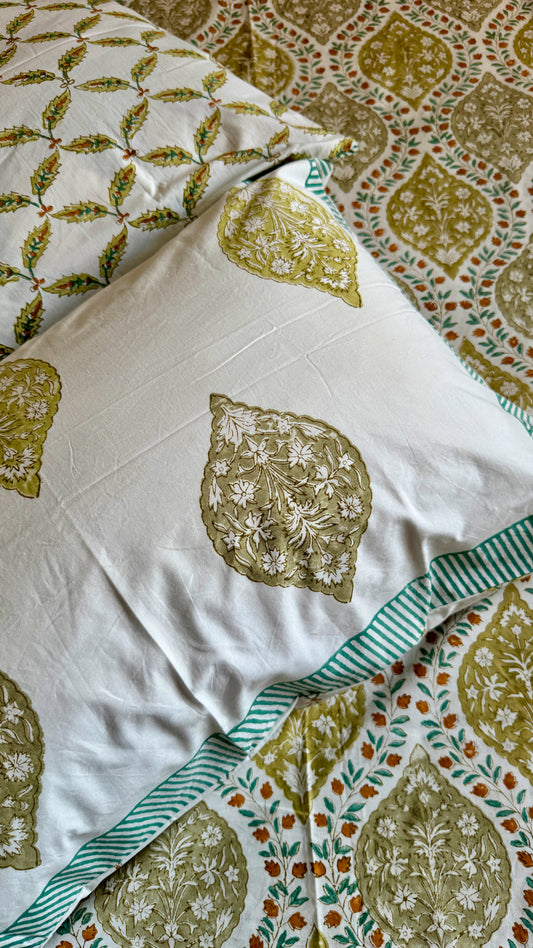
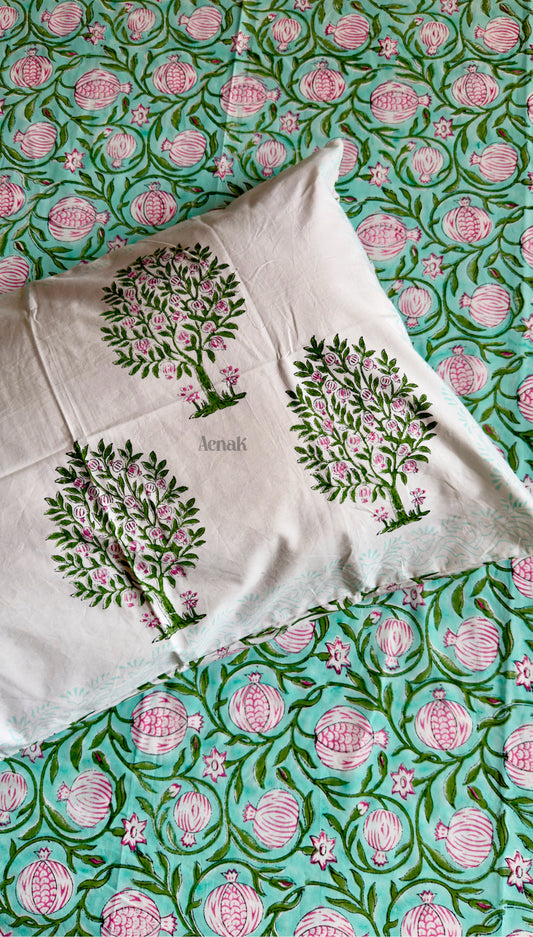
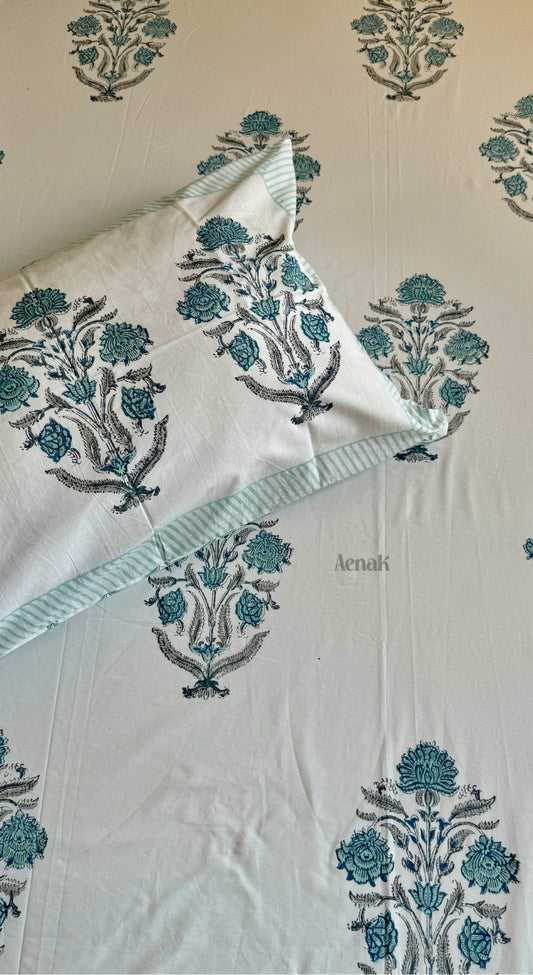
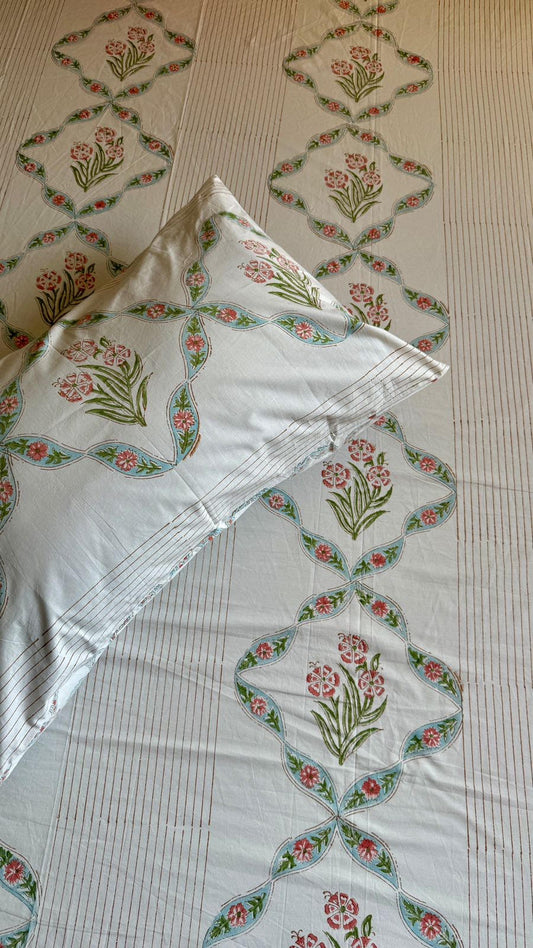
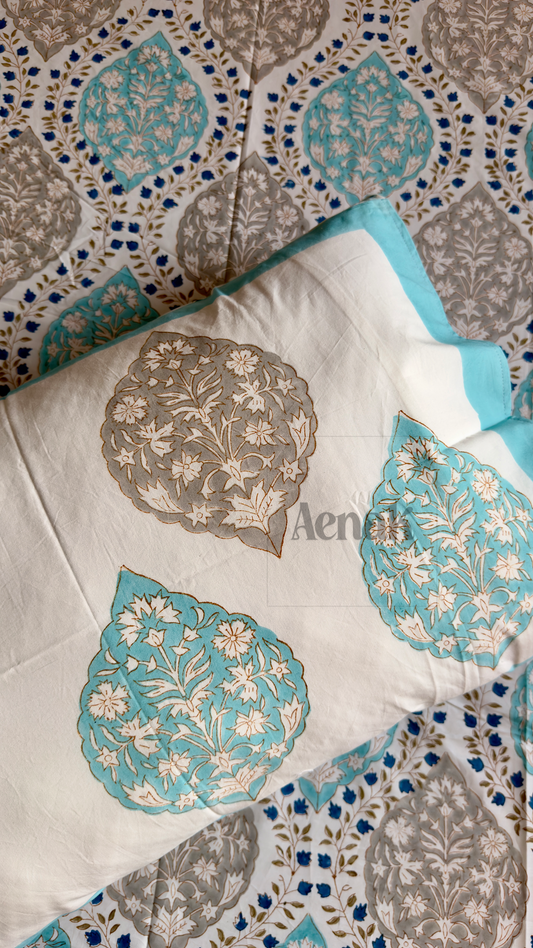
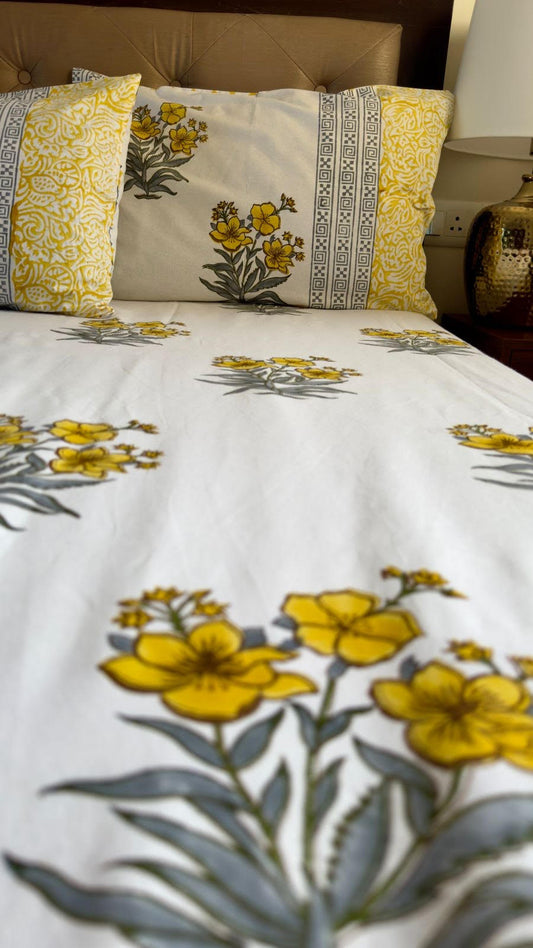
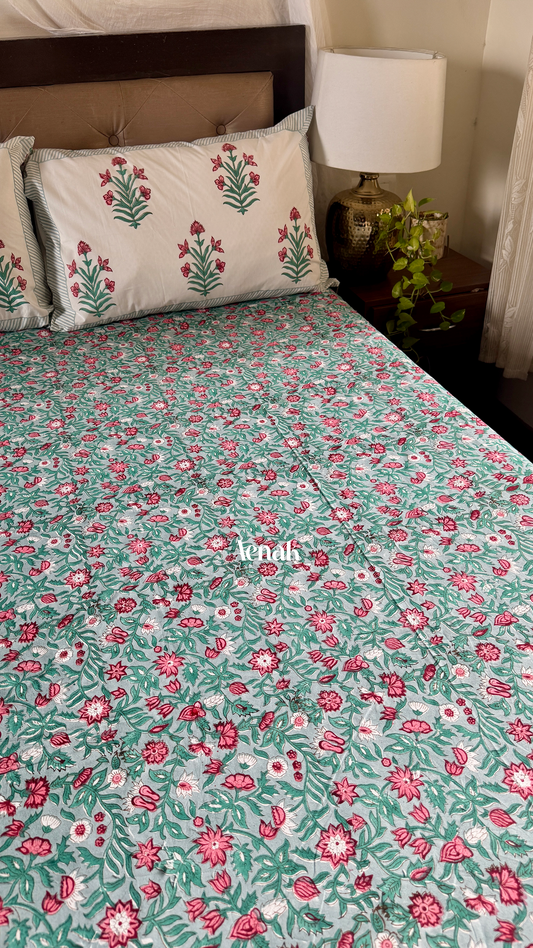
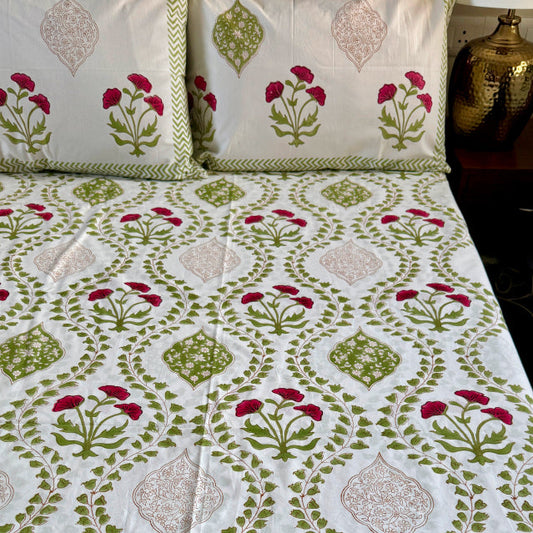
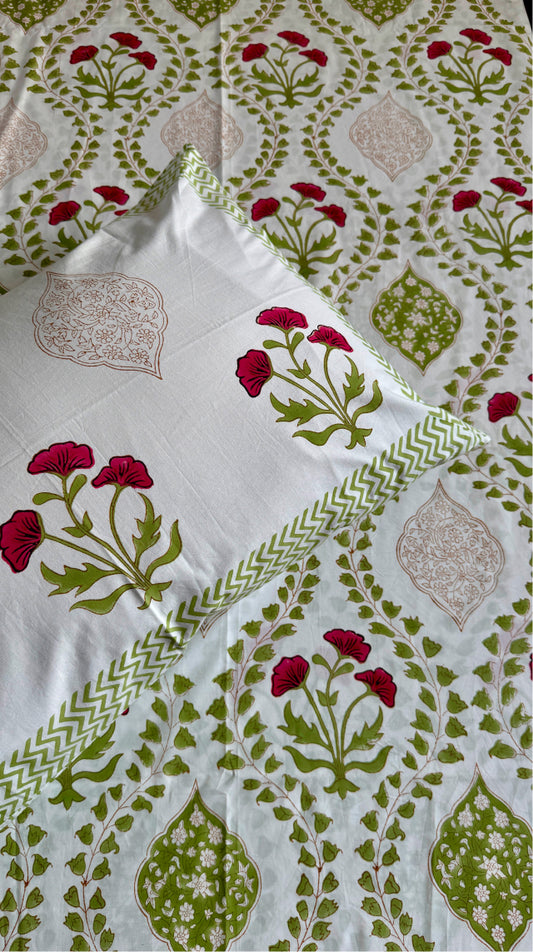
🖐️ Sanganeri Handblock Printing — Not Screen Print, Not Digital Every Aenak bedsheet is printed by hand — Chippa artisans in Sanganer press hand-carved teak wood blocks onto the percale cotton surface, one careful impression at a time. The floral buti, buta, and jaal patterns of the Sanganeri tradition appear on each bedsheet with a depth of colour and an organic edge quality that machine printing cannot replicate. Slight variations between impressions are visible on close inspection — they are the proof of the human hand, not a defect.
🎨 Azo-Free Dyes — Safe for Skin, Safe for Children Azo dyes are used in 60–70% of commercial textiles globally. Certain azo compounds can break down to release carcinogenic aromatic amines through skin contact. Bedsheets are in contact with your skin for 7–9 hours every night — which makes dye safety more important for bedding than for almost any other household textile. Every Aenak bedsheet uses azo-free dyes, certified free of harmful aromatic amines. Safe for daily contact, safe for children sleeping in the same bed.
✨ Gets Better With Every Wash — Genuinely Most bedsheets lose softness, pill on the surface, and fade in colour over months of washing. Aenak's 300 TC percale does the opposite — the cotton fibres relax and open with each wash cycle, creating a progressively softer sleeping surface. The colour of natural azo-free dye on percale cotton softens gently over years rather than fading unevenly. A well-maintained Aenak bedsheet at year three feels noticeably better than it did new. Typical lifespan with correct care: 5–8 years.
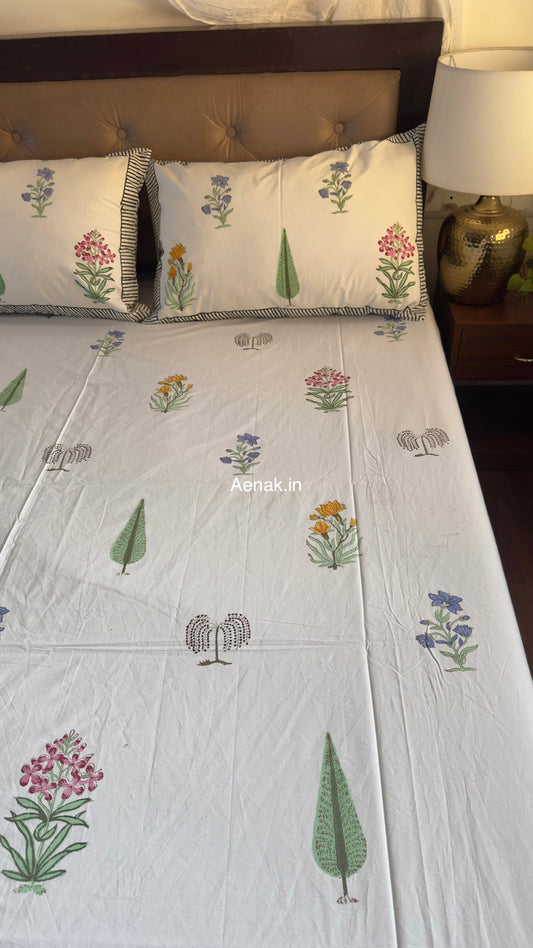
🛏️ Includes 2 Matching Pillow Covers Every Aenak bedsheet set includes two matching pillow covers in the same 300 TC percale cotton and the same handblock print. The pillow covers are reversible — block print on one side, solid coordinating colour on the other. Pillow covers are sized for standard Indian pillows (19×29 inches). For king-size beds with larger pillows, custom sizes are available on request via WhatsApp +91-9136167510.
📐 Available in All Indian Bed Sizes Aenak bedsheets are available in single bed (60×90 inches), double/king (90×108 inches), and super king (108×108 inches) sizes — covering all standard Indian mattress sizes from a child's single bed to the largest Indian king. Fitted sheet options are also available in select designs. See the full size guide below.
What Is TC in a Bedsheet? Thread Count Explained Simply
Thread count (TC) is one of the most misused terms in the bedsheet industry — and understanding what it actually means helps you see through the inflated numbers that dominate Indian e-commerce listings.
TC = total threads per square inch of fabric — warp threads (running lengthwise) plus weft threads (running crosswise). A 300 TC fabric has 150 warp and 150 weft threads per square inch, woven together in a tight, even grid. That is a genuine 300 TC measurement.
The widespread manipulation: some manufacturers count multi-ply threads — twisting two or three thinner threads together and counting each strand individually. A 2-ply yarn in a 200-thread grid gets counted as 400 TC. The actual feel of the fabric is unchanged; only the number is inflated. A genuine 300 TC single-ply percale will feel significantly better than a "600 TC" fabric made from the same amount of cotton twisted and double-counted.
Under 180 TC — Avoid for Daily Use Below 180 TC Fabric feels thin, rough, and cheap. Acceptable for utility purposes (hospital use, cheap hospitality) but not for a bedroom you care about. Washes poorly, pills quickly.
200–300 TC — Good to Premium 200–300 TC ← Aenak is here The genuine sweet spot for cotton bedsheets. Soft enough for daily sleeping comfort, breathable enough to stay cool in India's climate, durable enough to improve with years of washing. Most genuinely good Indian cotton bedsheets — hotel quality and above — live in this range. Aenak uses 300 TC.
400+ TC — Watch for Inflation Above 400 TC A genuine 400 TC single-ply percale is slightly less breathable than 300 TC — the weave is denser. Above 400 TC, most listings are using multi-ply counting. A "1000 TC" bedsheet is almost certainly a 250–300 TC single-ply fabric, double-counted. The feel is not better; the number is just larger.
Quick Answer — What Does 300 TC Mean in a Bedsheet?
300 TC means there are 300 threads per square inch of fabric — 150 running lengthwise and 150 running across. In percale weave, this creates a crisp, cool, matte-finish bedsheet that is soft from the first use and gets progressively softer with washing. It is the thread count used in quality Indian hotels and is considered the standard for premium cotton bedsheets in India's climate.
Sanganeri Handblock Printing — India's 400-Year-Old Textile Art, on Your Bedsheet
Sanganer — a town 6 kilometres south of Jaipur — has been India's handblock printing capital for over 400 years. The Chippa artisan community here carves intricate motifs into teak wood blocks and presses them onto cotton fabric one impression at a time, using dyes mixed by hand. The result is something that a digital printer or screen printer working at 100 times the speed simply cannot replicate: a slight variation in pressure between impressions, a warmth in the colour that only hand-mixed dye achieves, an organic edge to every motif line.
Aenak's bedsheet designs draw from the traditional Sanganeri vocabulary: buti (small scattered florals), buta (larger flower heads), bel (creeper and vine border patterns), and jaal (all-over lattice repeats). The motifs — roses, lotuses, peacock feathers, geometric borders — are rooted in a design tradition developed over four centuries for exactly this fabric: fine cotton that absorbs dye cleanly and shows the block's impression with clarity.
How to Identify Genuine Handblock Printing
Three signs of authentic handblock: (1) Slight variation between impressions — no two motif repeats are exactly identical. (2) Organic edges — the outline of each motif has a very slightly imprecise quality rather than the laser-sharp edge of machine printing. (3) Colour depth — block-printed dye penetrates the cotton fibre rather than sitting on the surface; the print reads rich from both sides of the fabric, not just the printed face.
How Aenak Bedsheets Compare — Cotton vs Microfibre vs Synthetic
The Indian bedsheet market has three broad categories that look similar at the time of purchase and diverge significantly over two years of use. Here is the honest comparison.
| Feature |
Aenak 300 TC Percale |
Standard Cotton (144–200 TC) |
Microfibre / Polyester |
| Fabric |
100% pure percale cotton Verified
|
100% cotton (usually) or cotton blend |
Polyester or polyester-cotton mix |
| Thread count |
300 TC — genuine single-ply |
144–200 TC — adequate |
Not applicable (different measure) |
| Breathability |
High — open percale weave, stays cool |
Medium-High |
Low — traps heat, causes sweating |
| Feel over time |
Gets softer every wash Improves
|
Stable, may soften slightly |
Pills and stiffens Degrades
|
| Dye safety |
Azo-free — certified skin-safe Verified
|
Usually unspecified — assume azo |
Almost always azo dyes, unverified |
| Print method |
Sanganeri handblock — artisan made |
Screen or digital print (usually) |
Digital print on synthetic surface |
| Lifespan |
5–8 years with correct care |
2–4 years typical |
1–2 years before pilling and fading |
| For India's climate |
Ideal year-round — cool and breathable Best
|
Good for most seasons |
Uncomfortable in summer Not suited
|
| Wash method |
Machine wash, gentle cycle, cold water |
Machine wash |
Machine wash (but degrades with heat) |
The practical test: after three years of weekly washing, an Aenak 300 TC percale bedsheet will feel better than it did new. A standard cotton bedsheet will feel similar or slightly worn. A microfibre or polyester-blend bedsheet will have visible pilling on the surface, dulled colour, and a slight stiffness that is the opposite of the silky feel it had when new. The best bedsheet is not the cheapest one today — it is the one that costs least per night of use over five years.
How to Wash and Care for 300 TC Cotton Bedsheets
A 300 TC percale bedsheet cared for correctly will last 5–8 years and improve throughout. The rules are simple — the most important one is also the most frequently broken: cold or lukewarm water only.
🧺 Machine Wash — Gentle Cycle, Cold or Lukewarm Water Machine wash on a gentle or delicate cycle in cold or lukewarm water (30°C maximum). Hot water causes cotton fibres to contract and tighten, reducing softness over time. For the first 1–2 washes, wash separately — any excess natural dye rinses out in the first few cycles. After that, the colour is stable and can be washed with other cottons.
🫧 Mild Liquid Detergent Only — No Bleach, No Powder Use a mild liquid detergent. Avoid harsh powder detergents — the alkaline compounds can degrade cotton fibres and dull handblock print colours over time. Never bleach a handblock printed bedsheet; bleach strips azo-free dyes along with anything else. Do not use fabric softener — it coats cotton fibres with a chemical layer that reduces the natural softening process and can irritate skin.
🌤️ Dry in Shade — Not Direct Sunlight Hang or lay flat to dry in shade or indirect light. Direct sunlight bleaches handblock print dye colours over time with repeated exposure — the reds fade faster than indigo, which can create an uneven look over years. A percale bedsheet dries reasonably quickly in indoor ventilation. Do not tumble dry on high heat.
🔥 Iron on Medium Heat While Slightly Damp Iron on the cotton setting (medium heat) while the bedsheet is still slightly damp — this produces the crispest, smoothest result with the least effort. Do not iron directly over block-printed areas on the highest heat setting; medium heat is sufficient for clean pressing and safe for the dye.
🔄 Rotate Your Bedsheets If you own two sets of bedsheets, rotate between them. This halves the washing cycles each sheet goes through and significantly extends the life of both. One bedsheet washed 52 times a year will show more wear at five years than two bedsheets washed 26 times each.
📦 Storage Store folded in a cool, dry place in a cotton storage bag or on an open shelf. Avoid plastic storage bags — cotton needs air circulation; plastic traps moisture that can cause yellowing over time. A well-stored Aenak bedsheet needs no special preparation between seasons.
✨ The Getting-Softer Effect — What to Expect New Aenak bedsheets may feel slightly crisp in the first 1–2 washes as finishing agents from the printing process rinse out. By the fifth wash, the percale will be noticeably softer. By the end of the first year of regular use, the bedsheet will have achieved its ideal feel — and will continue to soften slightly for years beyond that. Do not judge a 300 TC percale bedsheet by its first wash. Judge it at wash twenty.
Bedsheet Size Guide — Indian Bed Sizes in Inches and CM
Indian bed sizes are not standardised across manufacturers — what one brand calls "king size" another calls "double." Here is the definitive guide to matching your mattress to the right Aenak bedsheet size, with measurements in both inches and centimetres.
Single Bed Bedsheet 60×90 inches | 152×229 cm Fits standard Indian single mattresses (typically 36×72 inches or 36×78 inches). Provides comfortable tucking on both sides and at the foot. Comes with 1 matching pillow cover. Ideal for children's beds, guest rooms, and single sleepers. A single cotton bedsheet in a block print design also works well as a window covering or sofa drape.
Double / King Size Bedsheet — Most Popular 90×108 inches | 229×274 cm The standard size for Indian double beds and most "king" size beds (mattress approximately 60×72 inches or 60×78 inches). Provides comfortable drape and tuck on all sides for the standard Indian double mattress. This is the size most Indian households mean when they say "double bedsheet" or "king size bedsheet." Comes with 2 matching pillow covers.
Super King Size Bedsheet 108×108 inches | 274×274 cm For larger Indian king-size mattresses (72×78 inches and above) and anyone who prefers generous tucking on all sides. If your mattress is a true super-king (6×6 feet or 6.5×6.5 feet), this is the correct size. Also the right choice if you prefer the bedsheet to drape low on the sides rather than stopping above the bed base.
Fitted Bedsheet (Select Designs) Elasticated — fits mattress depths up to 12 inches Available in select Aenak designs for single, double/king, and super king mattresses. Fitted bedsheets have elasticated corners that grip the mattress and prevent slipping — ideal for mattresses used by children or anyone who moves significantly during sleep. Available in the same 300 TC percale cotton and handblock prints as flat sheets.
Quick Size Guide — Mattress to Bedsheet
36×72 in mattress (single) → 60×90 in bedsheet · 48×72 in (double) → 90×108 in bedsheet · 60×72 in (king) → 90×108 in bedsheet · 72×72 in (super king) → 108×108 in bedsheet
When in doubt between two sizes, choose the larger one — a bedsheet that drapes low looks intentional; one that barely tucks looks wrong. Extra length can always be tucked under; missing length cannot be created.
Bedsheets as Gifts — The Most Used, Least Celebrated Indian Gift
A premium cotton bedsheet is used every single night — it gets more contact hours than almost any other household object. Yet it is persistently under-considered as a gift, perhaps because it is so obviously practical that it feels unromantic. That impression is wrong. A beautifully handblock printed 300 TC percale bedsheet in Sanganeri tradition, arriving in the right packaging, is one of the most genuinely appreciated Indian home gifts across every occasion.
Wedding Gift King or Super King bedsheet set — immediately useful, memorably beautiful A premium cotton bedsheet set for a couple's new bed is used from the first night and for years after. A handblock printed Sanganeri design in 300 TC percale cotton is the kind of wedding bedsheet that people mention when asked "what's the best gift you received?" Gift packaging available on request — WhatsApp +91-9136167510.
Housewarming / Griha Pravesh The gift that completes the bedroom on day one When someone moves into a new home, a beautiful bedsheet set for the primary bedroom is one of the most immediately useful things they can receive. A famous Indian handblock printed bedsheet from Jaipur carries the craft story of Indian textiles — it has a reason for existing that a generic homeware gift does not.
Diwali / Festival Gifting Premium home linen in festive-quality packaging For Diwali and festive corporate gifting, a premium cotton bedsheet set positioned as an "upgrade your bedroom" gift lands well above the standard diya-and-sweets format. A block printed Indian bedsheet in Sanganeri tradition carries cultural significance and daily utility in the same package. Bulk corporate gifting available — contact us on WhatsApp +91-9136167510.
Baby Shower / New Home A single bedsheet in a kids design — the most practical gift A handblock printed single cotton bedsheet for a child's bed, in an Aenak kids design, is one of the most practical and beautiful baby and new-parent gifts. Azo-free dyes safe for children's contact, 300 TC cotton that gets softer over years of use, in a handblock print designed for a child's room.
The Aenak Promise — What Every Bedsheet Guarantees
100% pure percale cotton — no polyester, no cotton-rich blend, no synthetic fill of any kind
300 thread count, genuine single-ply — not inflated multi-ply counting
Azo-free dyes — certified free of harmful aromatic amines, safe for prolonged skin contact
Sanganeri handblock printing — Chippa artisans in Sanganer, Jaipur, not screen-printed imitation
Small-batch production — each run receives real individual attention, not industrial volume
2 matching pillow covers included in every bedsheet set (same fabric, same print)
Machine washable — gentle cycle, cold water, gets softer with every wash
Free shipping across India on all orders
In Plain Language
We do not sell "cotton rich" fabric as pure cotton. We do not inflate thread counts. We do not use azo dyes and hope you won't check. We print by hand, in small batches, with artisans who have been doing this for generations. If any of that is not what you receive, we want to know — WhatsApp +91-9136167510.
Frequently Asked Questions — Cotton Bedsheets
What does 300 TC mean in a bedsheet? Is it good?
TC (thread count) measures the number of threads woven into one square inch of fabric — horizontal plus vertical. A 300 TC bedsheet has 150 threads in each direction, woven in a tight percale grid. 300 TC is the ideal thread count for Indian cotton bedsheets — soft enough to feel premium from day one, breathable enough to stay cool year-round, and durable enough to improve with washing for 5–8 years. It is the thread count used in quality Indian hotels. Above 400 TC, most products are using inflated multi-ply counting rather than genuinely finer fabric.
What is percale cotton? How is it different from regular cotton?
Percale is a weave structure, not a different type of cotton. In percale, each weft thread passes over one warp thread and under the next in a simple one-over-one-under alternating grid — the tightest, most even cotton weave. This gives percale its characteristic crisp, cool, matte-finish feel. Compared to a sateen weave (where threads float over several before tucking under), percale is less silky but more breathable and more durable. For India's warm climate, percale is the better weave — it keeps the sleeping surface cooler year-round.
What is "cotton rich" and why does it matter?
"Cotton rich" is a labelling convention that means the fabric contains more than 50% cotton — typically 55–85% cotton and 15–45% polyester. These bedsheets are not the same as 100% pure cotton. They feel similar in the shop but behave differently over time — they breathe less well (polyester traps heat), pill faster (synthetic fibres break at the surface), and feel worse after washing rather than better. Aenak bedsheets are 100% pure cotton — every thread. If a listing says "cotton rich," "poly-cotton," or does not specify, do not assume it is pure cotton.
What size bedsheet do I need for a king-size bed in India?
Indian "king size" is not standardised — it typically refers to mattresses between 60×72 inches and 72×75 inches. For most Indian king-size beds (60×72 or 60×78 inch mattress), the 90×108 inch bedsheet provides comfortable drape and tucking on all sides. For larger mattresses (72×72 inch and above), choose the super king size (108×108 inches). If unsure, measure your mattress and contact us on WhatsApp +91-9136167510 — we will confirm the right size.
What bedsheet size is right for a standard Indian double bed?
A standard Indian double bed has a mattress of approximately 60×72 inches. The correct bedsheet size is 90×108 inches — this provides 15 inches of overhang on each side and comfortable tucking at the foot. This is the most popular Aenak bedsheet size and what most Indians mean when they say "double bed bedsheet" or "king size bedsheet." The 108×108 inch super king is for larger beds with mattresses above 72 inches wide.
Are azo-free dyes really safe? What's the difference?
Azo dyes are used in approximately 60–70% of commercial textiles globally. Under certain conditions — heat, friction, prolonged skin contact — certain azo compounds can break down to release aromatic amines, a class of chemicals classified as potential carcinogens. Azo-free dyes are synthetic dyes formulated without these compounds and are certified safe for prolonged skin contact. For bedsheets — which are in contact with your skin for 7–9 hours every night — azo-free is the only responsible standard. All Aenak bedsheets use azo-free dyes, verified at the dye-supplier level.
What is Sanganeri block printing and how is it done?
Sanganeri printing is a 400-year-old Indian textile craft from Sanganer near Jaipur. Chippa artisans carve intricate motifs — buti, buta, bel, jaal patterns — into teak wood blocks and press them onto cotton fabric one careful impression at a time using hand-mixed azo-free dyes. Every Aenak bedsheet is printed this way. Slight variations between impressions — in colour depth, in the precise edge of each motif — are natural and are the proof of the human hand. They are not defects; they are what distinguishes genuine handblock printing from screen-printed or digital imitations.
Do Aenak bedsheets come with pillow covers?
Yes — every Aenak bedsheet set includes matching pillow covers in the same 300 TC percale cotton and the same handblock print. Single bedsheets come with 1 pillow cover; double, king, and super king bedsheets come with 2 pillow covers. Pillow covers are standard Indian size (19×29 inches) and reversible — block print on one side, solid coordinating colour on the other. If you need additional pillow covers or a different size, contact us on WhatsApp +91-9136167510.
How do I wash a 300 TC handblock printed cotton bedsheet?
Machine wash on a gentle or delicate cycle in cold or lukewarm water (30°C maximum). Use a mild liquid detergent — no bleach, no harsh powder detergent, no fabric softener. Wash separately for the first 1–2 cycles to let any excess natural dye rinse out cleanly. Dry in shade rather than direct sunlight, which can fade handblock print colours over time. Iron on medium heat while slightly damp for the crispest finish. The bedsheet gets softer with every wash — do not judge it until wash ten.
Is a cotton bedsheet good for summer in India?
Yes — 100% cotton percale is the best bedsheet fabric for Indian summers. Cotton's natural fibres are hygroscopic — they absorb light perspiration and release it through the weave, keeping the sleeping surface drier and cooler than synthetic fabrics that trap moisture against the skin. At 300 TC in percale weave, the fabric is breathable enough to stay cool even in rooms without AC. Pair it with a mulmul cotton dohar for AC room coverage and you have the complete Indian summer sleep setup.
What is the best bedsheet for a double bed in India?
For a standard Indian double bed (60×72 inch mattress), a 300 TC percale cotton bedsheet in the 90×108 inch size — like every Aenak bedsheet — is the right choice. The criteria: 100% pure cotton (not cotton-rich), 200–300 TC for breathability and durability, azo-free dyes for skin safety, and a genuine handblock print rather than a digital or screen-printed imitation if the design is important to you. Any bedsheet that does not specify dye safety and fabric purity is making a promise it may not keep.
How long does a 300 TC cotton bedsheet last?
A 300 TC percale cotton bedsheet, cared for correctly, typically lasts 5–8 years of daily use — and feels better at year three than it did on day one, as the cotton fibres have relaxed and opened with repeated washing. The keys to longevity: cold or lukewarm water only, mild liquid detergent, shade drying, and rotating between two bedsheet sets to halve the washing cycles each sheet goes through. A bedsheet that is machine-washed in hot water weekly will degrade significantly faster than one washed in cold water on a gentle cycle.
What makes a bedsheet "famous Indian" — what should I look for?
India's most famous bedsheets are traditionally associated with two craft traditions: Jaipur's handblock printing (Sanganeri and Bagru styles) and Solapur's woven cotton. Aenak's bedsheets come from the Sanganeri tradition — handblock printed by Chippa artisans in Sanganer near Jaipur on 300 TC percale cotton. When looking for genuinely Indian bedsheets, check for: the specific printing region (Sanganer or Bagru, not just "Jaipur-inspired"), the printing method (handblock, not digital or screen print), and the fabric specification (100% cotton, not cotton-rich blend).