Aenak · Handblock Printed Bedding
The Dohar — India's Most Loved Summer Blanket, Handblock Printed by Artisans in Jaipur
When the fan is on full speed and a bedsheet alone isn't enough — but a quilt is too warm — you need a dohar. Aenak's handblock printed mulmul cotton dohars are made in small batches by Chippa artisans in Sanganer, Jaipur, using 100% pure cotton and azo-free dyes. Light enough to forget it's there. Beautiful enough to leave out all day.
What Is a Dohar? (Dohar Meaning Explained)
Dohar Meaning — Quick Definition
A dohar (दोहर) is a traditional Indian three-layer cotton blanket made from two outer layers of soft mulmul (muslin) cotton and a thin middle layer of cotton filling called falalen. The word comes from the Hindi dohrana — meaning to repeat or layer. Also called a dohar blanket, dohar chadar, or AC dohar, it is India's lightest and most breathable bed covering — designed for Indian summers, AC rooms, and year-round use in warm climates.
India invented the dohar for precisely the weather that covers most of the country for most of the year: too warm for a razai or quilt, not cold enough to go without anything at all. The dohar sits in that exact space — warmer than a bedsheet, cooler and lighter than any quilt or comforter. In Mumbai, Bengaluru, Hyderabad, and Chennai, a good cotton dohar is the only blanket most households need all year. In Delhi, Lucknow, and Jaipur, it covers seven months before a razai is needed.
The three-layer construction is what makes a dohar unique. The two mulmul outer layers are soft, breathable, and the surface for handblock printing. The falalen fill between them provides just enough warmth — a whisper of cotton, not a layer — so you feel covered without feeling hot. This construction is why a mulmul dohar weighs under 400 grams for a double bed (roughly the weight of a large mango) while still providing the tactile comfort of being under something.
Dohar in Other Languages
Dohar meaning in Hindi: दोहर — from dohrana, to layer or repeat · Dohar in English: Summer blanket / AC blanket / Indian muslin quilt · Dohar meaning in Marathi: उन्हाळी चादर (summer cover) · Dohar meaning in Telugu / Tamil / Kannada / Gujarati / Malayalam: A light cotton blanket — the word dohar itself is used across regions as no regional equivalent captures it as precisely.
Why Choose the Aenak Handblock Printed Dohar?
🌿 100% Mulmul Cotton — Pure, Natural, No Synthetics
Every Aenak dohar is made from 100% mulmul (muslin) cotton — the lightest, most breathable natural cotton fabric available. Mulmul's open weave allows air to circulate through the fabric itself, not just around it. No polyester, no microfibre, no synthetic blends. The result is a dohar that stays cool against skin even on the warmest nights, and gets noticeably softer with every wash.
🖐️ Handblock Printed by Artisans in Sanganer, Jaipur
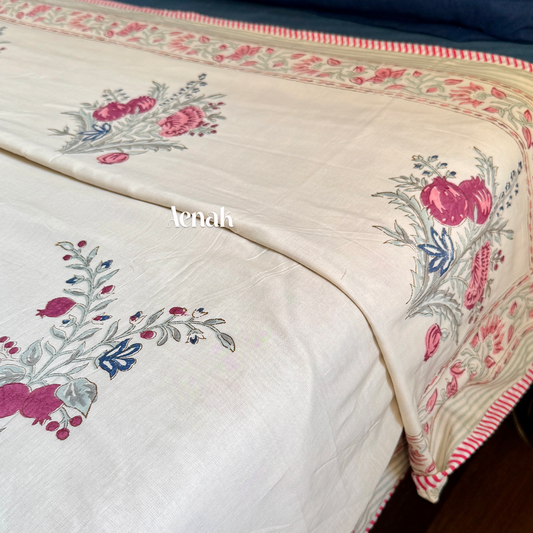
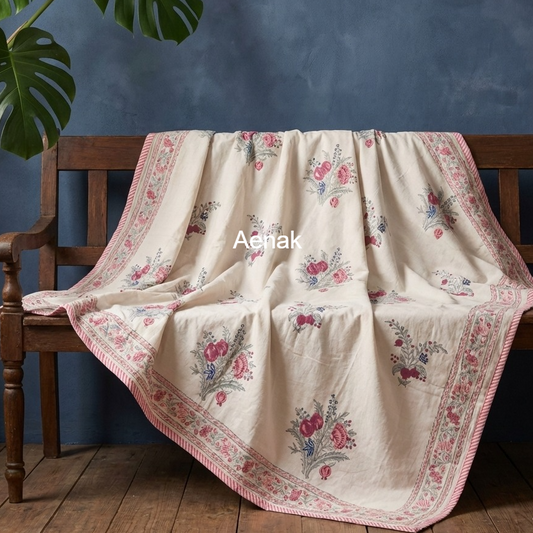
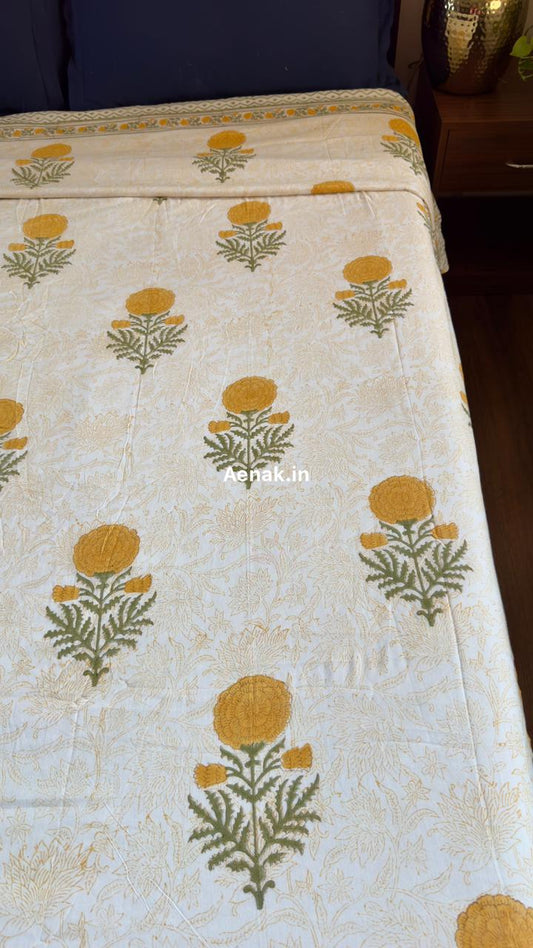
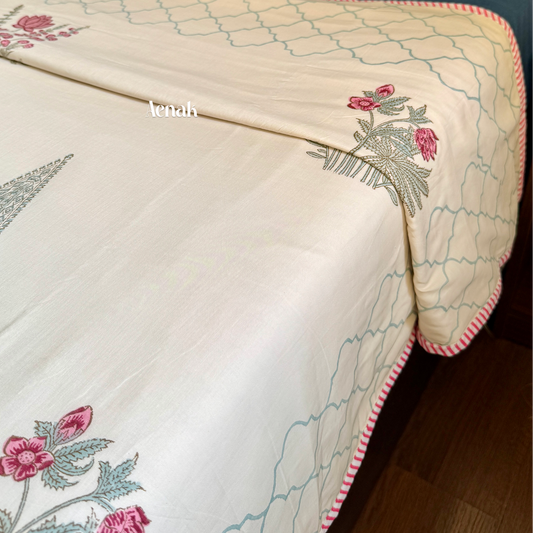
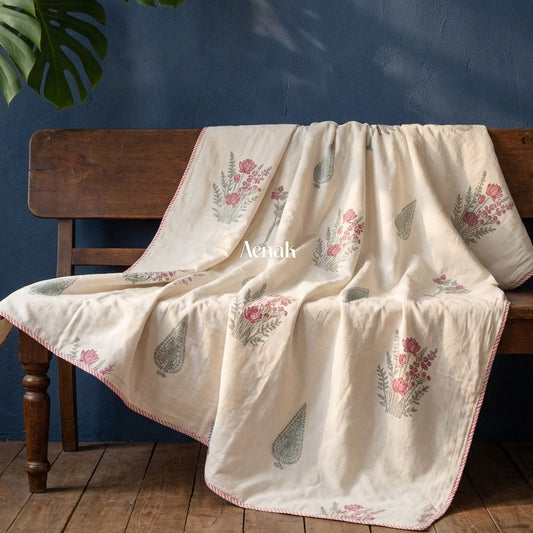
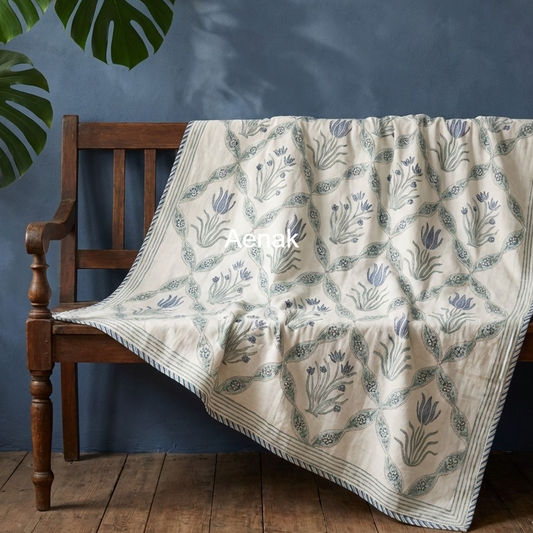
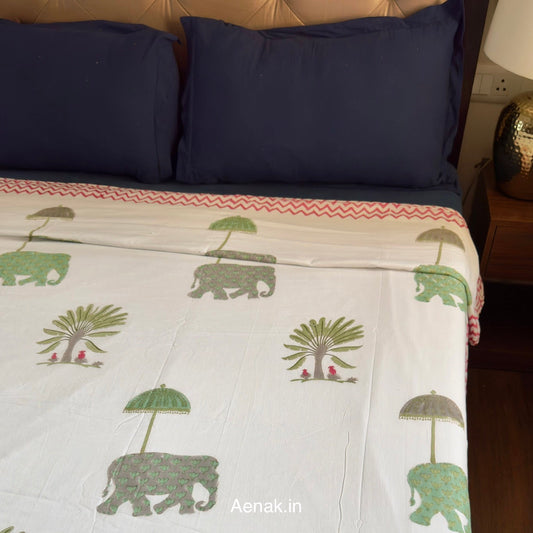
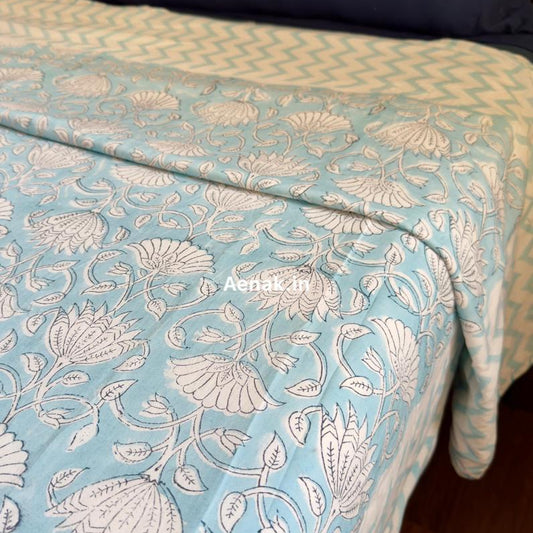
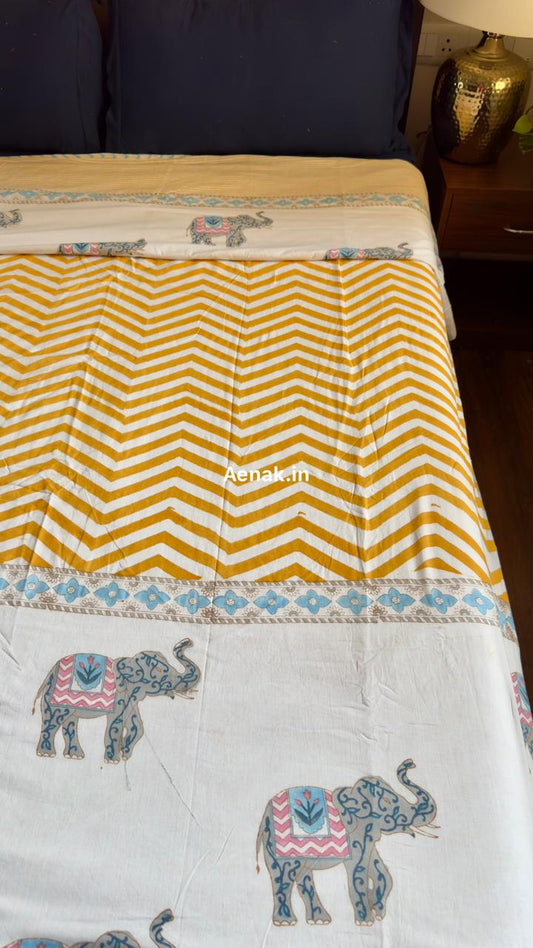
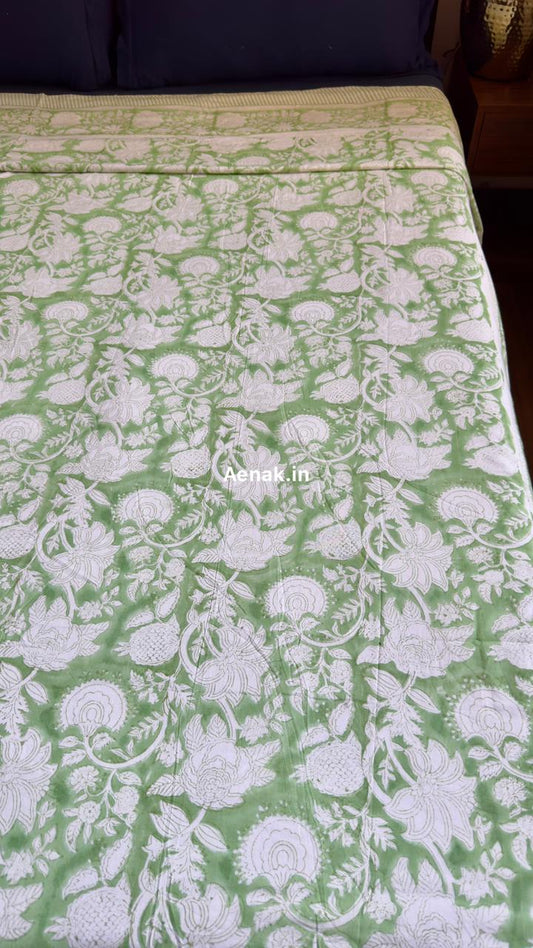
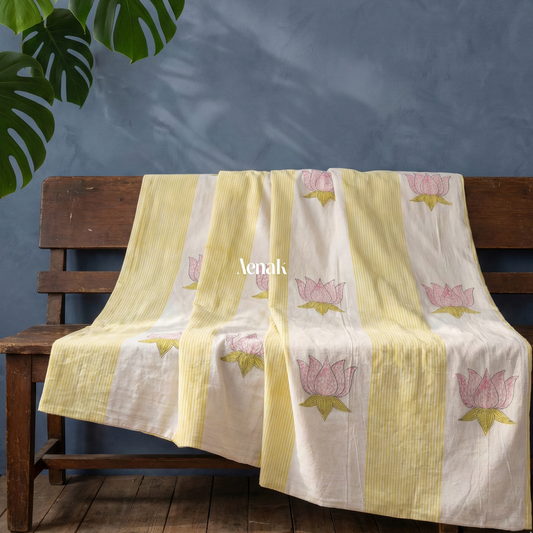
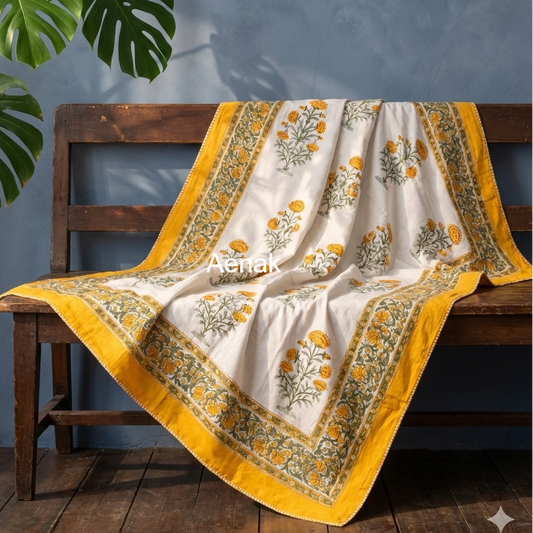
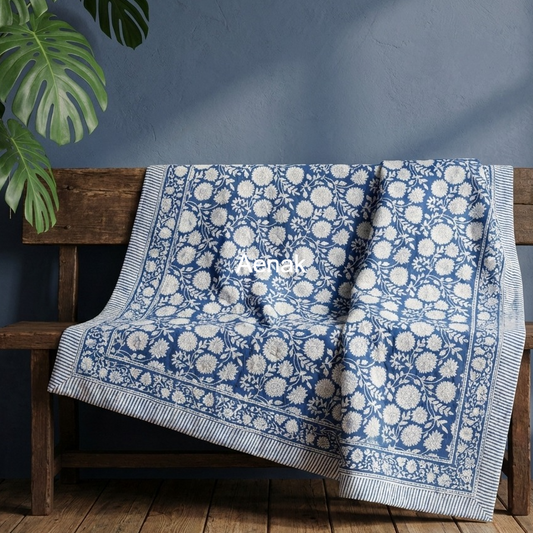
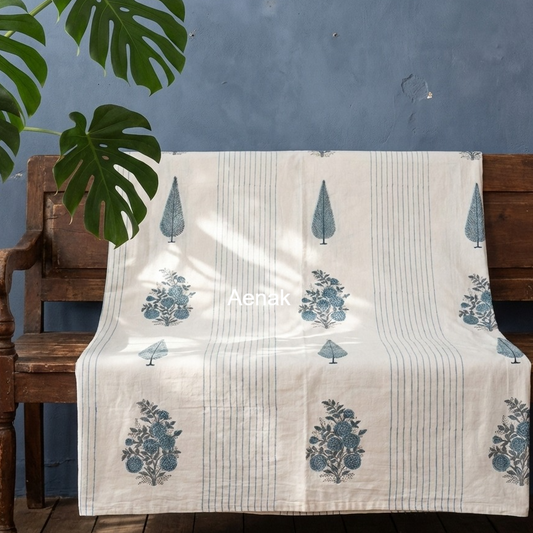
The outer mulmul fabric of every Aenak dohar is printed by hand by Chippa artisans in Sanganer — India's 400-year-old handblock printing capital near Jaipur. Artisans press hand-carved teak wood blocks onto fabric one careful impression at a time, building the floral and geometric motifs that give Aenak dohars their distinctive look. No digital printing, no screen printing. Slight variations between impressions are not imperfections — they are the proof of the human hand behind every piece.
🎨 Azo-Free Dyes — Safe for Skin, Safe for Babies
All Aenak dohars use azo-free dyes — certified free of the harmful aromatic amines that certain synthetic dyes can release. This makes Aenak dohars safe for extended skin contact including for babies, toddlers, and people with sensitive or allergy-prone skin. No chemical finishes, no softener treatments — the mulmul fabric softens naturally with washing, the way good cotton always has.
✨ Gets Softer with Every Wash — Improves Over Time
Mulmul cotton's finest quality is not how it feels on day one — it is how it feels at year two. The fine cotton fibres relax and open with each wash cycle, becoming progressively softer. An Aenak mulmul dohar at the end of its second summer of daily use is noticeably softer than it was new. This is the opposite of synthetic bedding, which degrades with washing. A well-made mulmul cotton dohar lasts 5–8 years with proper care — and gets better every wash.
❄️ Ideal for AC Rooms and Indian Summers
An Aenak mulmul dohar is the perfect AC dohar — light enough to prevent overheating at midnight when the AC is running strong, substantial enough to prevent the 3am chill that sends you reaching for a heavier blanket. For non-AC summer nights from March through June across South and Central India, the mulmul dohar's breathable open weave is the only covering that allows real sleep at 28–32°C ambient temperatures.
👶 Safe for Kids and Babies
Aenak makes kids dohars specifically for children — in single and small sizes, with playful handblock printed designs using the same azo-free dyes and 100% mulmul cotton as the adult range. Baby skin is approximately 30% thinner than adult skin, which is why dye safety matters more for children's bedding than any other household textile. Aenak's mulmul cotton dohars are hypoallergenic, lightweight, and verified azo-free — trusted by parents across India for babies' beds from the first year.
🎁 Perfect Gift — Dohar Sets and Paired Options Available
A beautiful handblock printed mulmul dohar makes an excellent gift for housewarming, weddings, baby showers, and Diwali. Aenak dohar sets are available as single + double combinations, single set of two (two dohars in the same design — ideal for twin beds or gifting), and bedsheet with dohar set combinations. The block-printed designs in natural cotton present beautifully and are the kind of practical luxury that gets used every single day.
🌏 Shipped Across India and Internationally
Aenak ships all dohars free across India. For international orders — to the US, UK, Europe, Australia, and the Middle East — contact us directly on WhatsApp +91-9136167510 for shipping costs and timelines. Many of Aenak's international customers are NRIs who grew up with mulmul dohars in India and have never found anything equivalent locally.
Dohar vs Comforter vs Quilt vs Blanket — What's the Difference?
The most common question Indian buyers have: what is the difference between a dohar and a comforter? And closely following: dohar vs quilt — which one do I need? Here is the honest comparison.
| Bedding |
Fill |
Weight (double) |
Warmth |
Breathability |
Best for India |
| Mulmul Dohar (Aenak) Summer & AC
|
Thin cotton falalen |
Under 400g |
Light |
Maximum |
Summer, AC rooms, monsoon, babies, year-round warm sleepers |
| Regular Cotton Dohar |
Thin cotton fill |
500–700g |
Light-Medium |
High |
Mild winter, cooler AC rooms, transitional weather |
| AC Quilt / Razai (Aenak) |
Light carded cotton (rui) |
800g–1.2kg |
Medium |
Medium |
AC rooms at 18–22°C, mild North Indian winter |
| Jaipuri Razai |
Fine hand-carded cotton |
1–1.5kg |
High |
Medium |
North Indian winter (Dec–Feb), temperatures below 15°C |
| Comforter / Duvet |
Polyester or down fill |
1.5–2.5kg |
Very High |
Low |
Western climates; not suited for India's warm conditions |
The key difference between a dohar and a comforter is the fill. A comforter is designed to trap and hold warmth — thick fill, heavy weight, low breathability. A dohar is designed to provide the feeling of coverage without the weight of insulation — thin falalen fill, minimal weight, maximum breathability. For India's climate — where even "winter" in most cities means 15–20°C — a mulmul dohar covers more of the year than any other single piece of bedding.
Which Dohar Do You Need? A Seasonal City Guide
India's climate varies so dramatically that the right dohar in Mumbai is not quite right in Delhi — and the right dohar in May is not quite right in December. Here is the practical guide.
Mumbai · Chennai · Kochi · Goa — Year Round
Mulmul Dohar, all year
Coastal cities rarely drop below 22°C even in January. A mulmul dohar is the only covering needed year-round. A cotton dohar double bed size works for couples; two single dohars for separate beds.
Bengaluru · Pune · Hyderabad — Most of the Year
Mulmul Dohar (March–November) · Layer with light quilt (December–February)
These cities have a genuine but mild winter. A mulmul dohar covers nine months. For December through February, layer an Aenak AC Razai on top of the dohar rather than replacing it.
Delhi · Jaipur · Lucknow · Chandigarh — Full Range
Mulmul Dohar (March–October) · Razai (November–February)
North India has the full seasonal swing. A mulmul dohar covers the warm months — including the peak summer months when sleeping under even a cotton quilt is uncomfortable. Transition to a Jaipuri Razai from November.
Kolkata · Bhubaneswar · Patna — Humid Summers
Mulmul Dohar (April–October) · Dohar + Light Quilt (November–March)
East India's humid summers make mulmul especially valuable — its open weave keeps skin drier than standard cotton in high-humidity conditions. A single bed dohar for solo sleeping; double bed dohar for couples.
Care Instructions — How to Wash a Mulmul Dohar
A mulmul cotton dohar cared for correctly will outlast its price many times over. Unlike a razai (which requires dry cleaning), an Aenak mulmul dohar is fully machine-washable — and gets softer with every wash cycle.
🧺 Machine Wash — Cold, Gentle Cycle
Machine wash on a gentle or delicate cycle in cold or lukewarm water. Avoid hot water — it can cause colour to run faster in natural dye products and may cause slight shrinkage in fine mulmul. For the first 1–2 washes, wash the dohar separately to allow any excess natural dye to rinse out cleanly.
🫧 Mild Liquid Detergent Only
Use a mild liquid detergent. Avoid harsh powder detergents, bleach, and fabric softeners. Fabric softeners coat cotton fibres with a chemical layer that can irritate skin and actually reduces the natural softening process of mulmul over time. The dohar does not need softener — it softens naturally with each wash.
🌤️ Dry in Shade
Hang or lay flat to dry in shade. Direct sunlight can fade natural block-print dye colours over time with repeated exposure. Mulmul dries quickly — a double bed dohar is typically dry within 1–3 hours on a good drying day. Do not tumble dry on high heat.
🔥 Iron on Low Heat Only
Iron on the lowest heat setting while the dohar is still slightly damp for the smoothest finish. Do not iron directly over block-printed areas on high heat. Mulmul scorches at high temperatures — never use the cotton or linen setting on your iron for mulmul fabric.
📦 Storage
Fold and store in a cool, dry place in a cotton storage bag or muslin wrap. Avoid plastic bags — cotton needs air circulation, and plastic traps moisture that can cause musty odour or yellowing over time. A well-stored mulmul dohar needs no special treatment between seasons.
✨ What to Expect — It Gets Better
Your Aenak dohar may feel slightly stiffer in the first 1–2 washes. This is completely normal for freshly printed mulmul cotton. By the fifth wash, it will be noticeably softer. By the end of the first summer of regular use, it will feel like something that has always been in your home — because it belongs there.
Dohar Size Guide — Single Bed, Double Bed, Kids, and Sets
Double / King Size
90 × 108 inches (229 × 274 cm)
Fits standard Indian double beds and king-size beds with comfortable drape on both sides. Ideal for couples or solo sleepers who like generous coverage. The most popular size — cotton dohar double bed is our top-selling variant.
Single Bed Dohar
60 × 90 inches (152 × 229 cm)
Sized for single beds, kids' beds, or solo sleepers. Compact enough to fold and use as a travel blanket or sofa throw. Our single bed dohar cotton option is the ideal size for a college student, a guest bedroom, or a children's room.
Single — Set of Two
2 × Single (60 × 90 inches each), same design
Two single dohars in the same handblock print — ideal for twin beds in the same room, a kids' bedroom with two beds, or as a gifting set. Better value than buying two singles separately. Our dohar set of two is a popular choice for gifting to couples who prefer separate covers.
Kids Dohar / Baby Dohar
Small sizes (40 × 60 inches) and Single (60 × 90 inches)
Aenak's kids dohar collection uses the same mulmul cotton and azo-free dyes as the adult range, in playful handblock prints sized for children's beds, cots, and toddler mattresses. Available in baby dohar (small) and single bed dohar sizes for older children.
Bedsheet with Dohar Set
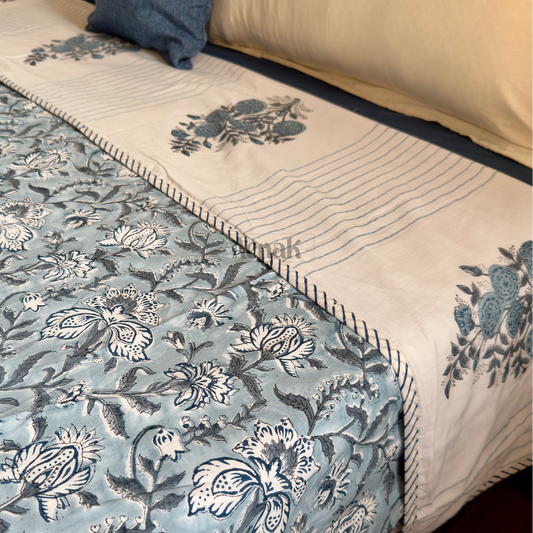
Matching dohar + bedsheet in the same handblock print
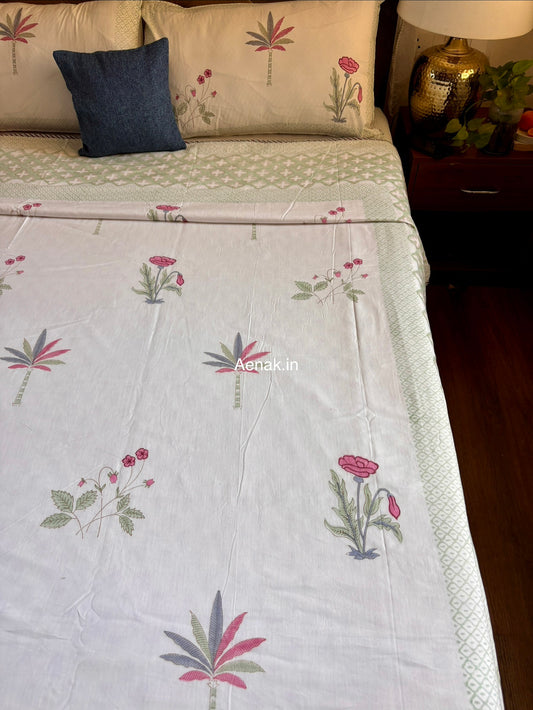
For a fully coordinated bed — handblock printed percale cotton bedsheet and mulmul dohar in matching or complementary designs. The bedsheet + dohar set makes the strongest impression in a bedroom and is our top gifting recommendation for housewarming and wedding occasions.
About the Craft — Jaipuri Handblock Printing on Mulmul
Aenak's dohars are made in Sanganer — a town 6 kilometres south of Jaipur that has been India's handblock printing capital for over 400 years. Chippa artisans here carve intricate floral motifs into teak wood blocks — roses, lotuses, creeping bel vines, peacock feathers, geometric jaal patterns — and press them onto mulmul cotton one careful impression at a time.
A Jaipuri dohar or Rajasthani dohar printed this way carries slight variations between impressions — in the amount of dye absorbed, in the exact pressure of the block. These variations are not defects. They are the signature of the handmade process and the reason authentic handblock printing cannot be replicated by a machine. Every Aenak dohar has a human hand present in it. That is not a romantic claim — it is what the slight irregularity at the edge of each motif proves.
Aenak works directly with Chippa artisan workshops in Sanganer, without intermediaries. We specify azo-free dyes, inspect at the workshop before dispatch, and run in small batches — which means each dohar has received real attention rather than being the 500th in an industrial run.
The Aenak Promise on Every Dohar
100% mulmul cotton outer layers · Azo-free, skin-safe dyes · Sanganeri handblock printing by Chippa artisans · Cotton falalen fill · Close running-stitch quilting · Gets softer with every wash · Safe for babies and sensitive skin · Free shipping across India
Frequently Asked Questions About Dohars
What is a dohar? (Dohar meaning in Hindi)
A dohar (दोहर) is a traditional Indian three-layer cotton blanket — two outer layers of soft mulmul (muslin) cotton with a thin cotton fill (falalen) stitched between them. The word comes from the Hindi dohrana — to layer or repeat. In English, a dohar is sometimes called a summer blanket, AC blanket, or Indian muslin quilt. It is lighter and more breathable than a quilt or comforter — designed for Indian summers, AC rooms, and warm climates year-round.
What is the difference between a dohar and a comforter?
The difference is in the fill and the purpose. A comforter is thickly filled with down, polyester, or synthetic material and designed to trap warmth for cold climates — it typically weighs 1.5–2.5 kg. A dohar is lightly filled with a thin wisp of cotton falalen and designed for the feeling of coverage without the weight of insulation — it weighs under 400–700 grams. A comforter is too warm for most Indian conditions outside of hill stations. A dohar is designed specifically for India's climate — warm without being hot, light without feeling exposed.
What is the difference between a dohar and a quilt (razai)?
A razai (रज़ाई) or quilt has a thicker fill of carded cotton (rui) that provides genuine winter warmth — ideal for temperatures below 15°C in North India. A dohar's falalen fill is much thinner, making it lighter, more breathable, and suited to warmer conditions. For Indian summers and AC rooms: reach for the dohar. For North Indian winters (December–February): reach for the razai. In most Indian cities, a dohar covers 8–10 months of the year.
What is a mulmul dohar and why is it better?
A mulmul dohar uses mulmul (muslin) cotton for its outer layers — an ultra-fine, open-weave fabric weighing 50–80 GSM (compared to regular cotton at 100–140 GSM). This makes mulmul dohars the lightest and most breathable option available. A double-bed mulmul dohar weighs under 400 grams. Mulmul also gets softer with every wash, making it the preferred fabric for babies, sensitive skin, and anyone who values textiles that improve with age. Aenak uses 100% mulmul cotton on all its dohars.
Is a dohar good for AC rooms?
Yes — a mulmul dohar is the ideal AC dohar. Air-conditioned rooms in India are typically set to 20–24°C, which is too cold for just a bedsheet but too warm for a quilt or razai. A mulmul dohar provides exactly the right weight — enough to feel covered and prevent the 3am chill when the AC runs cold, not so heavy that you overheat by midnight. It is the solution to the classic Indian AC bedroom problem.
Can I machine wash the dohar?
Yes — unlike a razai or quilt with thick fill, an Aenak mulmul dohar is fully machine-washable. Wash on a gentle or delicate cycle in cold or lukewarm water with a mild liquid detergent. No bleach, no powder detergent, no fabric softener. Dry in shade. The dohar gets softer with every wash — more washing is genuinely better for a mulmul cotton dohar.
What sizes are available for the dohar?
Aenak dohars are available in: Double/King (90×108 inches — for double and king beds); Single (60×90 inches — for single beds, kids' beds, travel); Single Set of Two (two singles in the same print — ideal for twin beds or gifting); Kids/Baby sizes (40×60 inches for small beds and toddlers, 60×90 inches for older children). Matching bedsheet + dohar sets are also available. Custom sizes are available on request — contact us on WhatsApp +91-9136167510.
Is the Aenak dohar safe for babies and kids?
Yes — all Aenak dohars use azo-free dyes verified safe for extended skin contact, including for babies. The 100% mulmul cotton is hypoallergenic and free of synthetic blends. Baby skin is approximately 30% thinner than adult skin, which is why dye safety matters more for children's bedding than any other household textile. Aenak's kids dohar range is specifically designed for children's beds in playful handblock designs using the same safety standards as the full adult range.
What is Sanganeri handblock printing on dohars?
Sanganeri printing is a centuries-old textile craft from Sanganer near Jaipur. Chippa artisans carve intricate floral and geometric motifs into teak wood blocks and press them onto mulmul cotton one impression at a time using azo-free dyes. Every Aenak dohar is printed this way. Slight variations in colour and impression between pieces are natural — they are the proof of the human hand behind every dohar, and what distinguishes genuine handblock printing from machine-printed fabric that mimics it.
Does a dohar get softer with washing?
Yes — and this is one of mulmul cotton's most distinctive properties. The fine cotton fibres relax and open up with each wash cycle, becoming progressively softer over time. An Aenak mulmul dohar at year two, after hundreds of washes, is softer than it was when new. This is the opposite of synthetic fabrics, which pill and stiffen with washing. A mulmul dohar is one of the rare household purchases that genuinely improves with use — treat it well and it becomes an heirloom.
Do Aenak dohars come with pillow covers?
Dohars and quilts at Aenak are comforters — they do not include pillow covers. Bedsheets and bedcovers come with two matching pillow covers. For a fully matched set, consider a bedsheet + dohar combo — a matching handblock printed percale bedsheet (with pillow covers) and a mulmul dohar in the same or coordinating design. This is Aenak's most popular gifting combination.
Can I use a dohar in winter?
A mulmul dohar works well in mild winter conditions — down to approximately 18°C — for warm sleepers and in climates like Bengaluru, Pune, and coastal India. For genuine North Indian winters where temperatures drop below 15°C (Delhi, Jaipur, Lucknow from December to February), layer an AC Razai over the dohar for extra warmth. The dohar provides a comfortable soft inner layer; the razai provides the insulation for cold nights. You do not need to replace the dohar — just add to it.